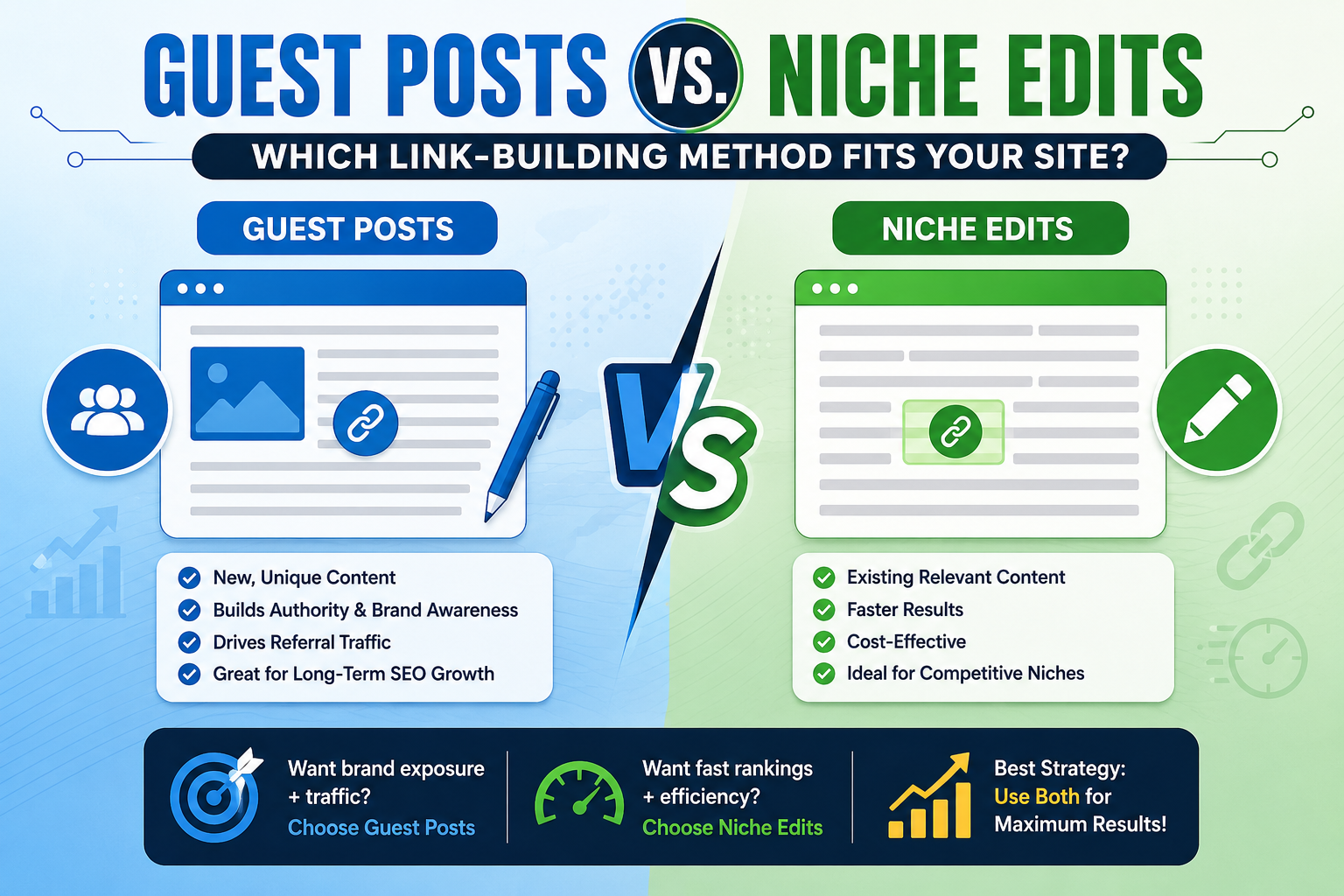
Backlinks are still one of the most reliable ways to build search authority, but there’s more than one way to earn them. Guest posts and niche edits are the two most common routes, and while they’re often lumped together as “link building,” they work very differently — and suit different goals. Here’s how to tell which one your site actually needs.
Guest Posts: Writing Your Way to a Link
A guest post means writing an original article for another site in your niche, usually with a link back to your own site built into the content. You’re not just buying a placement — you’re contributing something new.
What guest posts do well:
- You control the content. Since you’re writing it, the messaging, keywords, and link placement are all yours to shape.
- New audiences find you. Publishing on someone else’s platform puts your brand in front of readers who’d never encounter you otherwise.
- Relationships build over time. Repeated guest contributions tend to open doors — more collaboration, more visibility, more trust with other site owners.
Where guest posts get harder:
- They take real time. Writing a genuinely good article, then pitching and negotiating with a site owner, isn’t a quick process.
- Not every pitch lands. Rejections happen, and the review process can drag out.
- The host site’s quality matters. A backlink is only as good as the site it comes from — a low-quality host can drag your reputation down with it.
Niche Edits: Borrowing Existing Authority
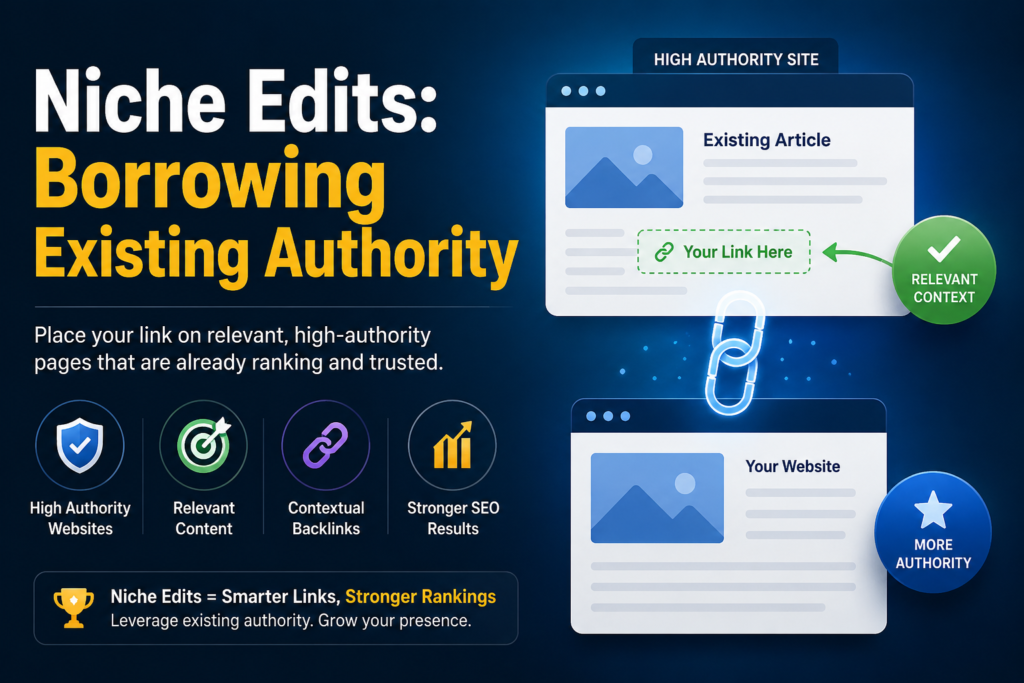
A niche edit, sometimes called a curated link, skips the new-content step entirely. Instead, your link gets inserted into an article that’s already published and already ranking — you’re borrowing traffic and authority the page has already earned rather than building it from scratch.
What niche edits do well:
- They’re fast. No new article to write means placements can happen much quicker than a guest post.
- You inherit authority immediately. A link dropped into an already-ranking page benefits from that page’s existing traffic and trust.
- They read as more natural. Search engines tend to view contextual links in established content favorably, since they look less like deliberate link placement.
Where niche edits get harder:
- You don’t control the surroundings. The rest of the article’s content and tone isn’t yours to shape, and it may not always match your brand cleanly.
- There’s a manipulation risk. Done carelessly, niche edits can look like exactly what they sometimes are — inserted links — which can draw search engine penalties.
- Finding the right page is work. Locating articles that are both relevant and receptive to adding your link takes real research.
So Which One Should You Use?
Lean toward guest posts if you’re focused on brand building, want to share genuinely valuable content, or are trying to build long-term relationships with people in your industry.
Lean toward niche edits if you need a faster SEO win, want to tap into a page’s existing authority without creating new content, or simply don’t have the bandwidth for a full content pipeline right now.
Why Not Both?
Most sites don’t have to pick a lane permanently. Combining the two tends to produce the best overall results:
- A more natural link profile. Mixing methods avoids the pattern that comes from relying on just one tactic.
- Coverage on two fronts. Guest posts extend your reach to new readers while niche edits reinforce your SEO in the background.
- Balanced effort. You get the quick wins from niche edits while still investing in the slower, relationship-driven payoff of guest posting.
Bottom Line
There’s no universal answer to guest posts versus niche edits — it comes down to what your site needs right now. If you’re playing a longer game around brand and audience, guest posts pull more weight. If you need efficient, targeted SEO gains, niche edits are the faster path. And for most sites, a blend of both ends up being the strongest strategy overall.

Daniel
Daniel is an SEO & Content Writer at MWT Media, specialising in crafting data-driven content that ranks. With a deep understanding of search engine optimisation, keyword strategy, and audience engagement. He creates compelling articles, blog posts, and web copy that not only attract organic traffic but convert readers into customers. At MWT Media, Daniel plays a key role in developing content strategies that align with client goals — from on-page SEO optimisation to high-quality guest posting campaigns.