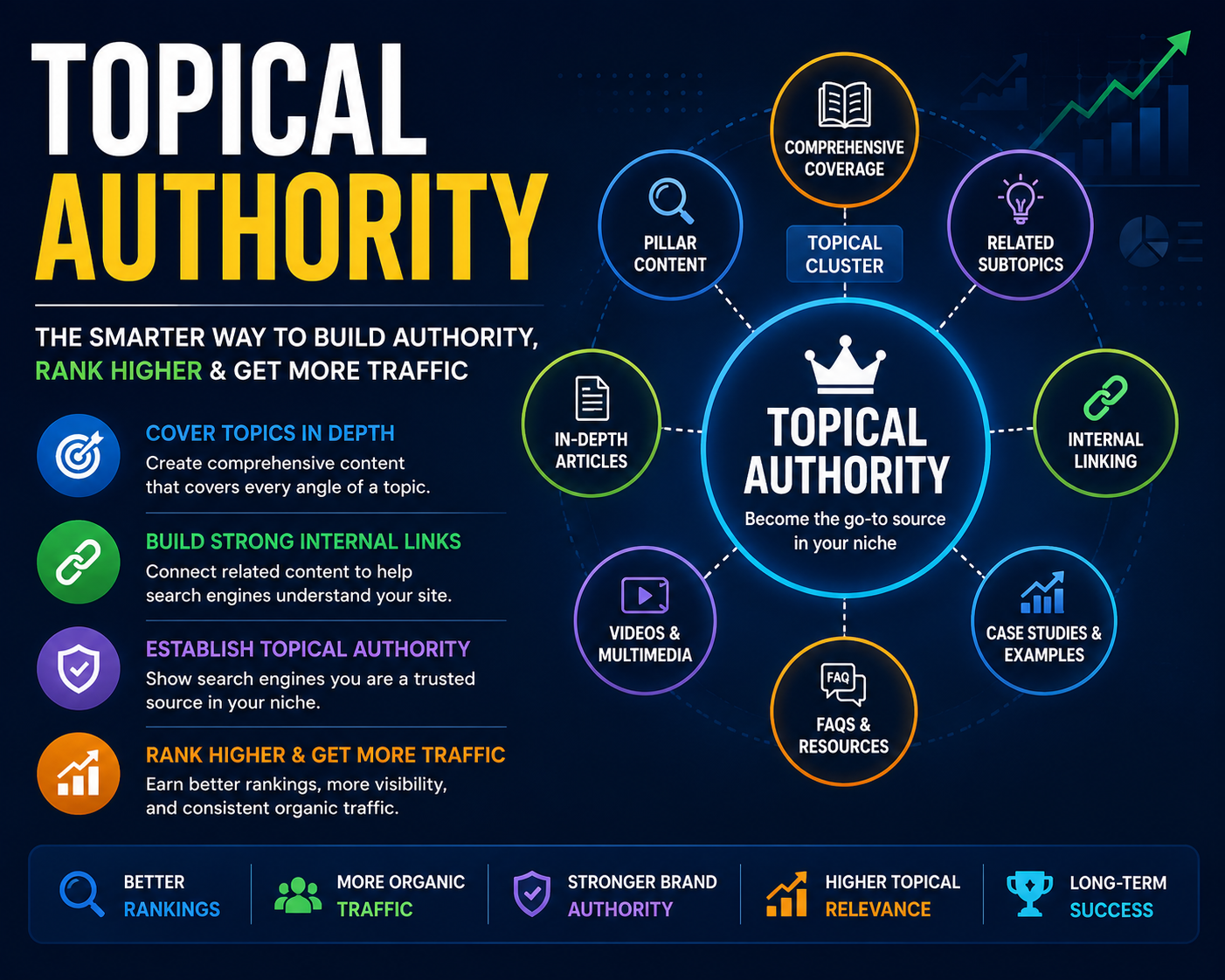
Search engines increasingly reward websites that demonstrate deep expertise in a specific niche rather than broad, scattered coverage of many unrelated topics. This is where topical authority comes in — and one of the most effective ways to build it is through strategic guest posting. In this guide, we’ll break down exactly how to build topical authority with guest posts, step by step.
What Is Topical Authority?
Topical authority refers to how much Google (and your audience) trusts your website as a go-to source on a particular subject. Instead of ranking for one keyword here and there, sites with strong topical authority tend to rank for entire clusters of related keywords because search engines recognize them as comprehensive, trustworthy resources on that topic.
Guest posting plays a powerful role in this process — not just for backlinks, but for signaling relevance, association, and expertise across your niche.
1. Choose Your Core Topic Cluster First
Before pitching a single guest post, define the specific niche or subtopic you want to be known for. Topical authority is built around clusters, not individual pages, so map out 5–10 core themes related to your main subject before you start outreach.
Tip: Use a content map or spreadsheet to track which subtopics you’ve already covered on your own site and which ones still need supporting content.
2. Target Guest Posting Sites Within Your Niche
The single biggest mistake marketers make is guest posting on random high-DA sites unrelated to their niche. To genuinely build topical authority with guest posts, every placement should come from a site that already covers your subject area — even if its domain authority is moderate rather than sky-high. Relevance beats raw authority every time.
3. Write Genuinely In-Depth, Expert-Level Content
Thin or generic guest posts do little for topical authority. Aim to write the most comprehensive, well-researched piece on that specific subtopic available on the host site. Include original insights, data, or frameworks that position you as a subject-matter expert — not just another contributor.
4. Interlink Guest Posts with Your Own Content Clusters
Whenever possible, link from your guest post back to a relevant, in-depth article on your own site — ideally one that’s part of the same topic cluster. This reinforces the topical authority signal by showing search engines a clear, thematic relationship between the linking site and your own content ecosystem.
5. Diversify Content Formats Across Guest Posts
Not every guest post needs to be a standard how-to article. Mix in case studies, original research, opinion pieces, and expert roundups across different publications. This variety strengthens your topical footprint and shows multiple angles of expertise within the same niche.
6. Maintain Consistent Author Branding
Use the same author bio, headshot, and credentials across every guest post. Consistent branding helps both readers and search engines connect the dots between your name, your site, and your specific area of topical authority — reinforcing your expertise every time your byline appears.
7. Prioritize Quality and Frequency Over Time
Building topical authority with guest posts isn’t a one-time campaign — it’s an ongoing strategy. Aim for a steady cadence of high-quality placements (e.g., 2–4 per month) rather than a short burst followed by silence. Consistency signals sustained expertise, not a one-off SEO push.
8. Track Topical Coverage, Not Just Backlinks
Instead of only measuring links earned, track which subtopics within your niche you’ve covered through guest posts. Identify gaps — themes competitors rank for that you haven’t addressed yet — and prioritize those in your next round of outreach.
Final Thoughts
Guest posting remains one of the most underrated tools for building topical authority when it’s approached strategically rather than as a pure link-building tactic. By focusing on niche relevance, in-depth content, and consistent thematic coverage, you signal to both search engines and readers that your brand is a genuine authority — not just another site chasing backlinks.

Daniel
Daniel is an SEO & Content Writer at MWT Media, specialising in crafting data-driven content that ranks. With a deep understanding of search engine optimisation, keyword strategy, and audience engagement. He creates compelling articles, blog posts, and web copy that not only attract organic traffic but convert readers into customers. At MWT Media, Daniel plays a key role in developing content strategies that align with client goals — from on-page SEO optimisation to high-quality guest posting campaigns.