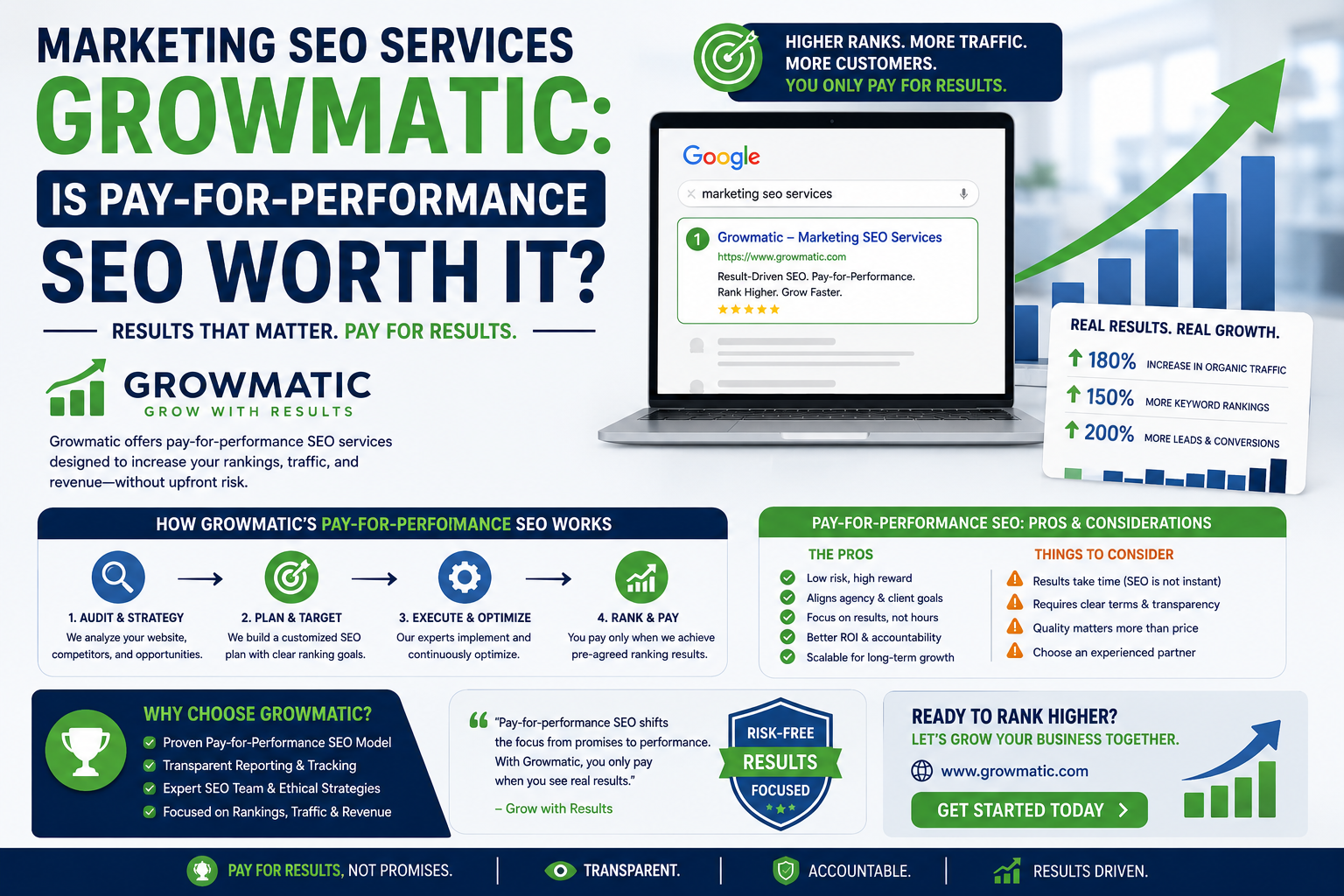
Most SEO agencies charge a flat monthly retainer whether or not your rankings move. Marketing SEO services Growmatic takes a different approach: a performance-based model where you pay a percentage of the organic revenue growth they generate, rather than a fixed fee. It’s an appealing pitch — but “pay only for results” comes with its own trade-offs worth understanding before you sign a 36-month agreement.
What Growmatic Actually Offers
GrowMatic is a digital marketing company offering SEO, PR, and content services, along with a free Chrome extension for scraping SERP data and generating on-page optimization suggestions. Their core offering is built around a performance-based pricing structure:
- No upfront fee — you pay a percentage (commonly cited around 15%) of verified organic revenue growth above a 12-month baseline.
- Eligibility requirements — GrowMatic’s model is built for established businesses, typically requiring at least $25,000/month (roughly $300,000/year) in organic revenue, 12 months of clean Google Analytics 4 and Search Console data, and a modern CMS.
- Target customers — primarily e-commerce (Shopify, WooCommerce), and SaaS businesses with existing organic traffic to build from.
- Scope of work — technical SEO fixes, content and internal linking, schema markup, local citations where relevant, and revenue attribution tracking through GA4 and CRM data.
This is a meaningfully different customer profile than most SEO shoppers: marketing SEO services Growmatic isn’t really built for a brand-new business or a small local shop with no organic traffic history — it’s designed for companies that already have a baseline to grow from.
The Case For Pay-for-Performance SEO
Aligned incentives. If the agency only gets paid when your organic revenue actually increases, they have a direct financial reason to make real improvements instead of just billing hours.
Lower upfront risk. For an established business with cash flow to protect, not committing to a flat monthly fee regardless of outcome is genuinely attractive.
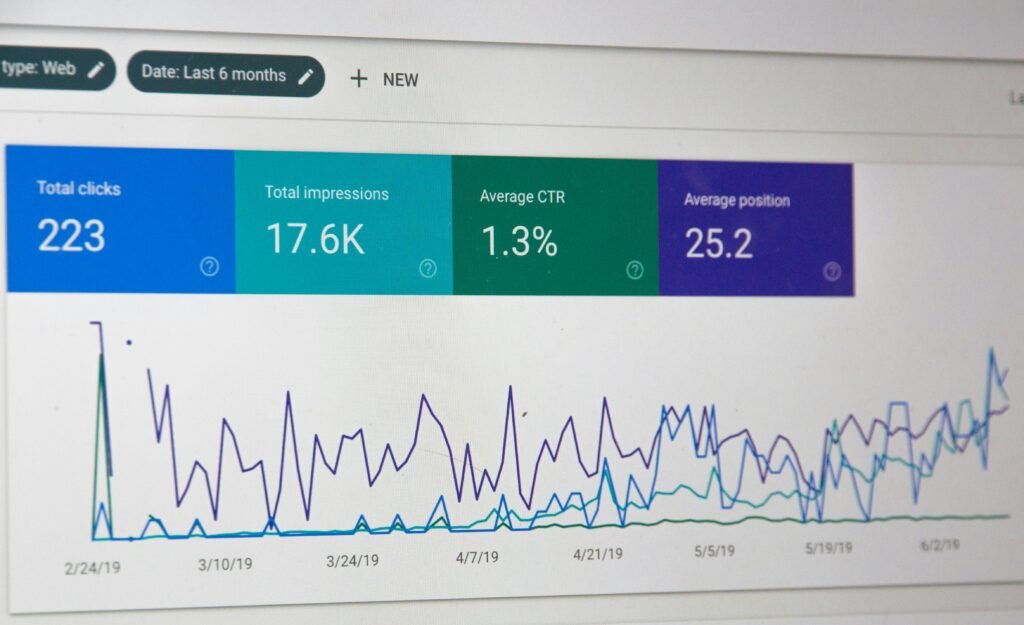
Built-in accountability. Because revenue attribution is tracked from the start, you get a much clearer picture of whether the work is paying off than with vague “ranking improvement” reporting.
The Trade-offs Worth Knowing
A long commitment. Performance-based arrangements like this often run on multi-year terms (reportedly around 36 months), which is a longer lock-in than a typical month-to-month retainer. Make sure you understand the exit terms before signing.
You need a baseline to grow from. If your organic revenue is small or your analytics history is messy, you may not qualify — or the “growth” calculation may be harder to verify cleanly.
Attribution can get complicated. Multi-touch revenue attribution across GA4 and a CRM is genuinely useful, but it also means the definition of “growth” is model-dependent. Ask exactly how the baseline and uplift are calculated, and get it in writing.
Watch the tactics, not just the pricing model. Some of GrowMatic’s marketing references a method for generating “genuine branded search activity.” Any tactic aimed at artificially inflating search signals — rather than earning them through real audience demand — is worth asking pointed questions about, since search engines’ guidelines generally treat manufactured engagement signals as a risk factor, not a growth hack. A results-based fee structure doesn’t automatically mean every underlying tactic is safe long-term; it’s still worth vetting the specific methods, the same way you would with any agency.
How to Evaluate If It’s Worth It for Your Business
If you’re considering marketing SEO services Growmatic or a similar performance-based provider, ask:
- What exactly counts as “organic revenue,” and how is the baseline calculated?
- What happens if growth stalls — do fees pause, or does the contract term extend?
- What are the specific tactics being used to drive growth, and are they aligned with search engine guidelines?
- What’s the actual exit clause if you want to leave before the contract term ends?
- Can they show a real, verifiable case study with attribution data, not just aggregate traffic charts?
The Bottom Line
Pay-for-performance SEO can make sense for an established e-commerce or SaaS business with clean analytics data and enough scale to make a revenue-share arrangement worthwhile — the incentive alignment is a real advantage over a flat retainer that pays regardless of outcome. But it’s not a shortcut around due diligence. Whether marketing SEO services Growmatic (or any performance-based provider) is worth it depends on how clearly they define “growth,” how long you’re locked in, and whether their underlying tactics are ones you’d be comfortable with a search engine scrutinizing directly. Get the attribution model and contract terms in writing before you commit.

Daniel
Daniel Addam is an SEO & Content Writer at MWT Media, specialising in crafting data-driven content that ranks. With a deep understanding of search engine optimisation, keyword strategy, and audience engagement, Daniel creates compelling articles, blog posts, and web copy that not only attract organic traffic but convert readers into customers. At MWT Media, Daniel plays a key role in developing content strategies that align with client goals — from on-page SEO optimisation to high-quality guest posting campaigns. His work is rooted in research, precision, and a commitment to delivering measurable results. When it comes to digital content, Daniel believes that great writing and smart SEO are not mutually exclusive — and his work at MWT Media reflects exactly that.