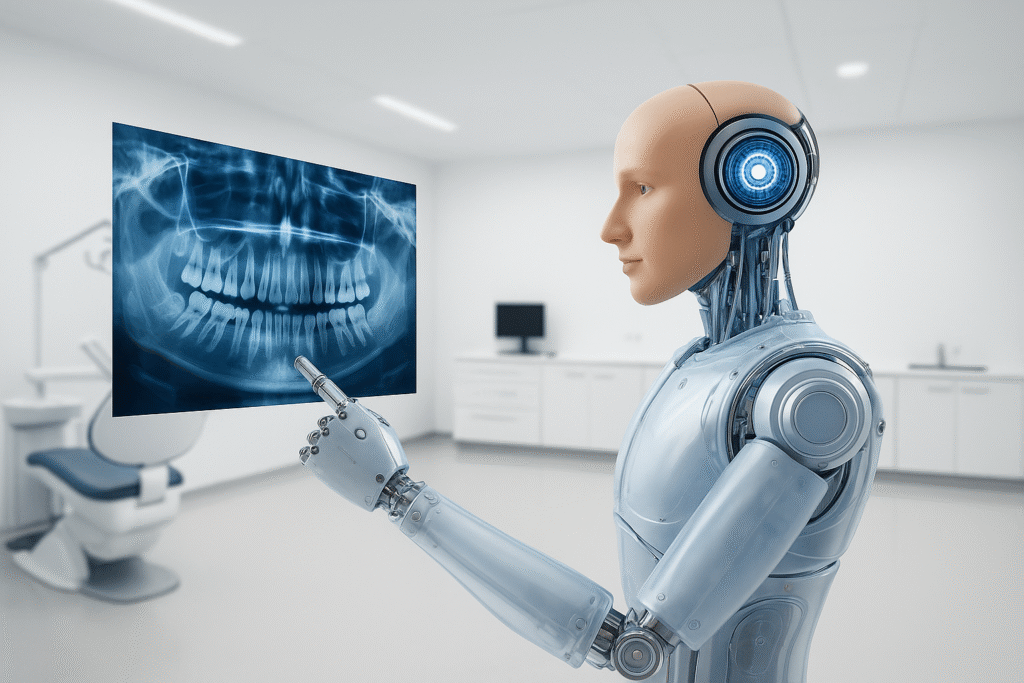
In the past decade, dentistry has quietly stepped into the age of artificial intelligence. What used to depend entirely on a dentist’s trained eye is now increasingly supported by powerful algorithms capable of analyzing dental images, detecting patterns, and predicting oral health risks. Among the emerging platforms shaping this shift, dentalx ai dental has become […]
A quiet revolution is unfolding inside pathology labs around the world. For decades, the field looked almost unchanged: microscopes, glass slides, and pathologists carefully examining tissue samples one by one. The work demanded patience, expertise, and long hours of intense visual analysis. But if you follow digital pathology AI news today, you’ll notice something remarkable—this […]
There’s a quiet shift happening inside modern businesses. It’s not loud like a product launch or dramatic like a merger announcement. It happens in workflows, in inboxes, in customer support tickets, in meeting rooms where someone says, “Let the assistant handle it.” That shift is powered by intelligent systems designed not just to automate — […]
Artificial intelligence is often framed as a technological revolution. Headlines celebrate faster algorithms, smarter automation, and machines capable of learning from vast oceans of data. Companies rush to integrate AI into their operations, hoping to unlock efficiency, productivity, and competitive advantage. But beneath the excitement lies a deeper reality that many organizations fail to recognize: […]
There’s a quiet panic that creeps in when you open your resume after a year—or three. The formatting feels outdated. The bullet points sound lifeless. Achievements that once made you proud now read like grocery lists. And somewhere between “responsible for” and “assisted with,” your real impact has disappeared. This is where AI can help—if […]
There are small features in tech that quietly carry the weight of everyday life. They don’t make headlines. They don’t trend on social media. But the moment they disappear, you feel it. That’s exactly what happened when the google messages update removes convenient sim selector for dual-sim users — a subtle change that has stirred […]
It’s a question that usually appears five minutes before an important meeting starts — or worse, right in the middle of one: Does Google Meet have a time limit? If you’ve ever been cut off mid-sentence with that awkward “meeting ended” message, you already know why this matters. In 2026, Google Meet is still one […]
There’s a quiet moment we’ve all experienced. You’re building a Google Slides presentation late at night. The design looks clean. The title slide feels confident. Then you reach the content slide—the one that actually explains something—and suddenly you pause. “How do I make this readable without overwhelming people?” That’s where bullet points step in. And […]
Margins seem like a small detail—until they quietly ruin an otherwise perfect document. I’ve seen it happen countless times: a well-written assignment rejected because the margins were “off,” a business proposal that looked cramped, or a printable guide that wasted half the page with empty white space. That’s usually the moment people start searching how […]
If you’ve ever tried to get help from Google, you already know the feeling. One minute you’re locked out of Gmail, the next your Google Ads account is suspended, or your business profile disappears overnight. You search, click, scroll… and wonder: How can I contact Google customer service in 2026? The short answer: it depends […]
Contains information related to marketing campaigns of the user. These are shared with Google AdWords / Google Ads when the Google Ads and Google Analytics accounts are linked together.
90 days
__utma
ID used to identify users and sessions
2 years after last activity
__utmt
Used to monitor number of Google Analytics server requests
10 minutes
__utmb
Used to distinguish new sessions and visits. This cookie is set when the GA.js javascript library is loaded and there is no existing __utmb cookie. The cookie is updated every time data is sent to the Google Analytics server.
30 minutes after last activity
__utmc
Used only with old Urchin versions of Google Analytics and not with GA.js. Was used to distinguish between new sessions and visits at the end of a session.
End of session (browser)
__utmz
Contains information about the traffic source or campaign that directed user to the website. The cookie is set when the GA.js javascript is loaded and updated when data is sent to the Google Anaytics server
6 months after last activity
__utmv
Contains custom information set by the web developer via the _setCustomVar method in Google Analytics. This cookie is updated every time new data is sent to the Google Analytics server.
2 years after last activity
__utmx
Used to determine whether a user is included in an A / B or Multivariate test.
18 months
_ga
ID used to identify users
2 years
_gali
Used by Google Analytics to determine which links on a page are being clicked
30 seconds
_ga_
ID used to identify users
2 years
_gid
ID used to identify users for 24 hours after last activity
24 hours
_gat
Used to monitor number of Google Analytics server requests when using Google Tag Manager
1 minute
Marketing cookies are used to follow visitors to websites. The intention is to show ads that are relevant and engaging to the individual user.
Pinterest Tag is a web analytics service that tracks and reports website traffic.