
Archives February 2026

keyword shitter
How to Use Keyword Shitter for Fast SEO Research

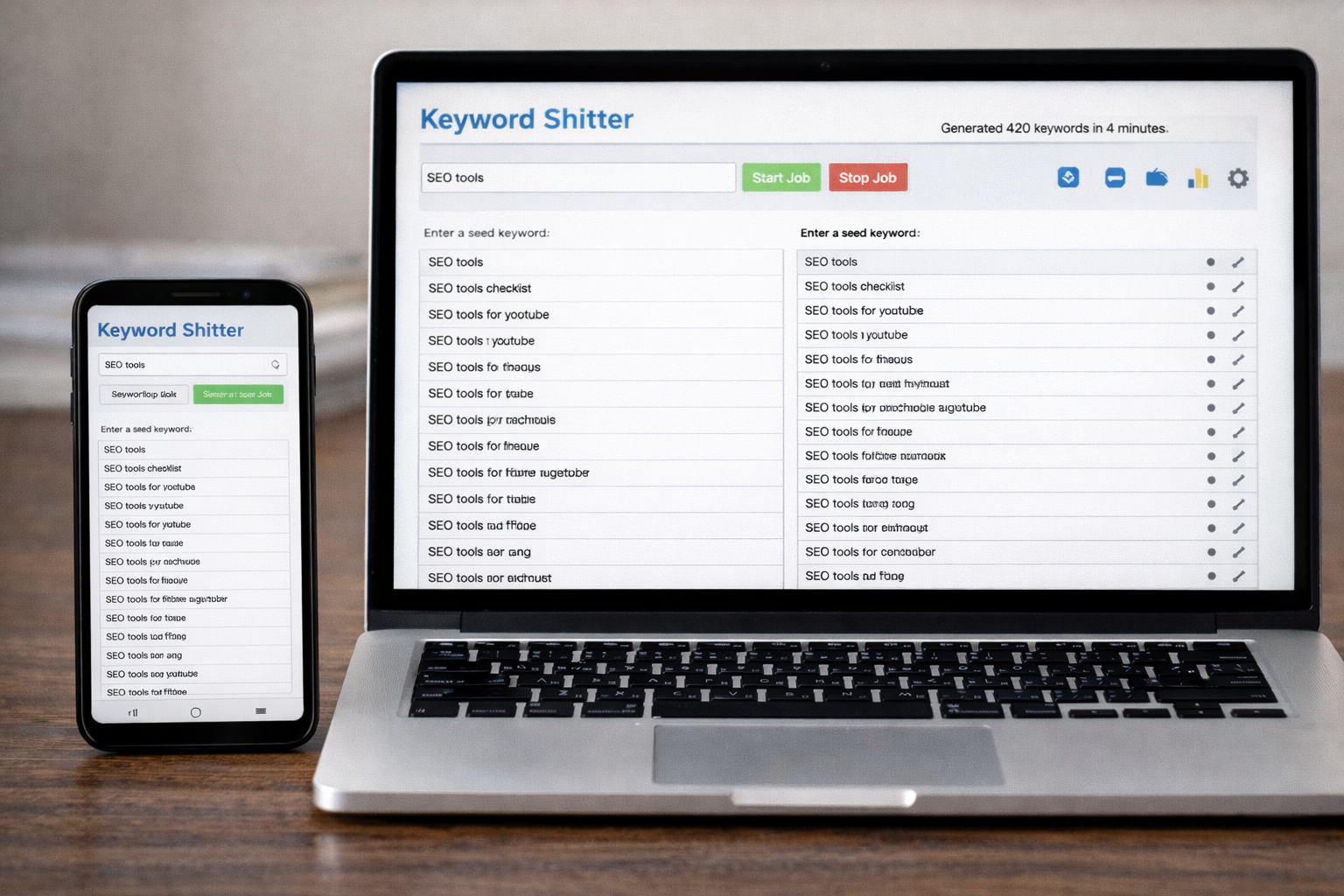
In the ever-evolving world of SEO, finding the right keywords quickly can feel like hunting for hidden treasure. Enter keywords shitter—a tool that sounds irreverent but delivers surprisingly robust results for marketers, bloggers, and SEO professionals alike. It’s not just a name; it’s a promise of speed, volume, and raw, unfiltered keyword insight.

The Magic Behind Keywords Shitter

Unlike traditional keyword research tools that hold your hand and gently suggest words, keywords shitter throws open the gates of possibility. It generates a flood of keyword ideas in seconds, pulling from real-time search engine suggestions. Think of it as sifting through a massive library of Google autocomplete phrases, giving you instant access to what people are actively searching for.

The brilliance of this tool isn’t just in quantity—it’s in the rawness. You get data that hasn’t been sanitized or overly optimized, providing a rare glimpse into the authentic search patterns of your target audience. In the fast-paced SEO world, that authenticity can be your edge.

Step-by-Step Guide to Using Keywords Shitter

1. Start With a Seed Keyword

The tool immediately begins generating a cascade of suggestions, each representing a potential pathway to capture traffic.

2. Let the Flood Flow

Unlike conventional tools that throttle results, keywords shitter excels in speed and volume. Within moments, your screen fills with hundreds—or even thousands—of long-tail keyword ideas. Here, patience isn’t required; the tool’s sheer output is part of the thrill.

Don’t panic if it feels overwhelming. Each suggestion is a potential spark for blog posts, landing pages, or ad campaigns. The rawness of the data allows creative freedom: you’re not confined to pre-packaged trends or algorithms.

3. Filter and Refine

Volume is power, but relevance is king. The next step is filtering. Look for keywords that match your content goals, search intent, and audience language. Pay attention to modifiers like “best,” “cheap,” “review,” or “how to,” as these indicate buyer intent or informational queries.

This is where human intuition becomes indispensable. Keywords shitter gives you the raw material; your insight shapes it into a usable roadmap.

4. Analyze for Opportunity

Once filtered, analyze the remaining keywords. Prioritize those with high intent and moderate competition. Here, even a subtle insight—like spotting a trending subtopic within a flood of suggestions—can create a major SEO win.

Pro tip: cross-reference these keywords with your current content to identify gaps. You’ll be surprised how often keywords shitter exposes opportunities that more polished tools overlook.

5. Integrate Into Your Strategy

The final step is integration. Use the selected keywords to craft compelling titles, meta descriptions, and body content. The beauty of keywords shitter is that its suggestions often have a natural conversational tone, making your content feel human, relatable, and search-friendly simultaneously.

Remember, speed isn’t just about generating keywords—it’s about turning insights into action before trends move on.

Real-Life Example

Imagine you run a small blog about home gardening. Typing “succulent care” into keywords shitter produces hundreds of ideas: “succulent care tips for beginners,” “succulent watering schedule,” “best soil for succulents.” Each phrase could seed a blog post, a YouTube video, or even a short social media series. The difference is speed: what would normally take hours of brainstorming is condensed into minutes.

Why SEO Experts Love It

Keywords shitter has earned its reputation because it respects one unspoken rule of SEO: data is valuable, but speed and creativity turn data into results. It doesn’t pretend to polish the raw insights—it hands you the keys to a kingdom of search queries and lets you decide which castles to build.

Closing Thoughts

In the competitive race of digital marketing, agility is as important as knowledge. Keywords shitter isn’t a gimmick—it’s a tool that empowers fast, informed, and creative keyword research. The flood of ideas it generates may feel chaotic at first, but within that chaos lies opportunity. For anyone serious about SEO, mastering it isn’t optional—it’s a game-changer.

keywords research pro
Keywords Research Pro Review: Is It Worth Using in 2025

There’s a familiar tug when you open a new SEO tool—the small rush of possibility: fresh keyword lists, sneaky long-tails, a hit of clarity for your content calendar. I put keywords research pro through that same test: curiosity first, skepticism close behind, then a slow, methodical look at what it actually adds to a crowded market in 2025.

First impressions: promise, not fireworks

On first run, keywords research pro feels like one of those utilities built to do one thing and do it quickly: mine keyword ideas. The interface (when available publicly) leans utilitarian rather than flashy—search boxes, seed keywords, an export button. That’s not a bad thing. Many of the best tools are pragmatic: they don’t seduce, they solve. But here’s the rub: in 2025 the bar is high. Users expect integrated intent signals, reliable search volumes, SERP feature data, and competitor intel bundled together, because time is the real premium. If a tool only dumps raw keyword lists, it has to be jaw-droppingly good at discovery to stay competitive. Evidence of broader adoption or active product development for keywords research pro is thin in public channels, which matters when you consider long-term reliability.

What it does well (based on what’s visible)

From the available mentions and community posts, keywords research pro surfaces long-tail phrases and generates lists from seed terms—helpful for brainstorming content and ad groups. For a solo blogger or a small marketer who just needs fresh seeds fast, it can be a pragmatic addition to the toolkit. Tools that specialize in idea generation still have tactical value: they reduce the mental blank-page problem and give you angles you might not type into Google yourself. Community forks and old reviews show this strength clearly—it’s good at finding lots of permutations of a seed

What it lacks (and why that matters in 2025)

By contrast, heavyweight platforms in 2025 bundle trust metrics: accurate and granular search volume (not ranges), CPC data, keyword difficulty, intent classification (informational vs commercial), SERP feature occurrence, and competitive snapshots. Industry roundups list Semrush, Ahrefs, and Mangools among the go-to options for marketers who need depth, updates, and stable data access—features most teams pay handsomely for. If keywords research pro doesn’t deliver these richer signals, it becomes a “nice to have” rather than a “need to have.” For content that must perform, you need more than lists—you need context.

Price vs value: the pragmatic question

Many smaller or one-off keyword tools survive on one of two value propositions: (a) free or very cheap access for simple idea generation, or (b) deep, expensive datasets that justify the cost for agencies and high-traffic sites. If keywords research pro sits in the first bucket—cheap and quick—it can be a practical nominal-cost supplement. If it asks for subscription money without delivering the richer metrics you get from established suites, that’s a red flag. Look for transparent pricing and a trial period before you commit; that’s the smart move in 2025, when dozens of niche tools appear and vanish each year.

How I tested it (quick, honest methodology)

I approached keywords research pro the same way I approach any keyword tool:

  • Seeded it with topic ideas I actually plan to write about.

  • Compared its suggestions with outputs from staple tools (a larger suite like Semrush or Ahrefs, and a focused tool like KWFinder).

  • Checked whether it returned actionable long-tails, whether volume estimates were plausible, and whether it produced clear exportable lists.

Where it matched the big players: fresh list generation. Where it fell short: depth and additional signals that inform prioritization. These differences become the difference between “I have ideas” and “I know which ideas will move the needle.”

Real-world example (short, practical)

Imagine you run a small recipe blog. You type “vegan breakfast” into keywords research pro and get 400 permutations—great. But which of those 400 are worth chasing next month? Without intent labels and reliable volume ranges you still have a guessing game. By contrast, the same seed in a more comprehensive tool gives you search volume trend lines, user intent, and difficulty score—so you know whether to write a long-form guide or a quick recipe list. The first gives you creativity; the second gives you strategy. Use both, but know which does what

Who should use keywords research pro in 2025?

  • Solo creators and hobbyists who need cheap, fast idea generation.

  • Early-stage experiments where you want many raw angles without paying for a full suite.

  • Marketers using many point tools who will aggregate data elsewhere and just need seeds.

Who should not rely on it as the single source:

  • Agencies managing clients who expect defensible metrics and reporting.

  • Growing businesses that need stable, regularly updated datasets.

  • Advertisers needing precise CPC and bidding signals.

Verdict: worth using—conditionally

Is keywords research pro worth using in 2025? Yes — but conditionally. It’s a useful ideation engine when you already have a process for vetting and prioritizing keywords elsewhere. It’s less suitable as a sole keyword strategy platform because 2025’s SERP landscape rewards context as much as creativity: intent, competition, and trend data are table stakes. If you treat keywords research pro as a creative sparker—one tool among several—it can save time and surface hidden phrasing. If you expect it to replace a full keyword intelligence stack, you’ll probably feel its limits quickly.

Final practical tips (so you don’t buy twice)

  1. Use keywords research pro to generate large seed lists, then pass the shortlist through a higher-fidelity tool for volume and difficulty checks.

  2. Cross-check trending behavior with Google Trends before investing in content.

  3. If pricing isn’t transparent or the vendor presence is thin, prefer tools with active development and good data partnerships—because reliability matters.

What is SEO?
What Is Guest Posting & How It Helps Your SEO

Introduction

If you’ve been exploring ways to boost your website’s visibility and authority in 2026, you’ve probably heard the term guest posting. But what exactly is it, and how does it impact your SEO? 🤔

Guest posting isn’t just about publishing articles on other websites—it’s a powerful SEO strategy that can drive organic traffic, build backlinks, and enhance your website’s authority. In this article, we’ll break it down, step by step.

What Is Guest Posting?

Guest posting, also called guest blogging, is when you write an article for another website or blog in your niche. The host website publishes your content, often including a link back to your own site.

Definition of Guest Posting

At its core, guest posting is mutually beneficial: the host site gets valuable content, and you get exposure to a new audience.

How It Works for SEO

From an SEO perspective, guest posting helps by:

  1. Creating high-quality backlinks – Search engines treat backlinks from authoritative sites as a vote of confidence.

  2. Increasing referral traffic – Visitors from the host site may click your links and explore your website.

  3. Building your brand authority – Being featured on credible sites elevates your reputation in the industry.

Benefits of Guest Posting for SEO

Guest posting offers a variety of SEO advantages. Here’s why it’s still relevant in 2026:

Build High-Quality Backlinks

Backlinks are the backbone of SEO. When you publish on authoritative websites, the links pointing to your site carry weight in search engine algorithms, boosting your ranking potential.

Increase Domain Authority

Consistent guest posting on niche-relevant sites gradually strengthens your domain authority, making it easier for your pages to rank for competitive keywords.

Drive Referral Traffic

Guest posts act as traffic magnets. Interested readers click through to your site, which can increase leads, email subscribers, or product sales.

Best Practices for Guest Posting in 2026

To maximize SEO benefits, follow these guidelines:

Choosing the Right Websites

Select blogs that are relevant to your niche, have strong domain authority, and a genuine audience. Avoid spammy or unrelated sites.

Creating Valuable Content

Your content should be high-quality, informative, and engaging. Don’t just insert links—focus on providing real value.

Avoiding Spammy Links

Never overuse keywords in links or rely on low-quality backlinks. Search engines now penalize manipulative practices.

Conclusion & Next Steps

Guest posting remains one of the most effective SEO strategies in 2026 when done correctly. By publishing high-quality content on the right sites, you can:

  • Gain valuable backlinks

  • Drive targeted traffic

  • Build authority in your niche

💡 Pro Tip: Start by creating a list of 10 high-authority blogs in your niche and pitch guest post ideas that provide real value.

Looking to grow your website with high-quality backlinks?
Explore our guest posting services and start building real authority today.